
• Why Not Take Whales from the Wild? • The Story of Maris & Beethoven • Imagine You’re a Beluga • Forward or Backward? • Enough Already

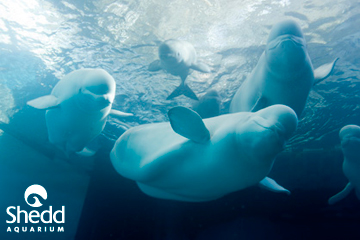
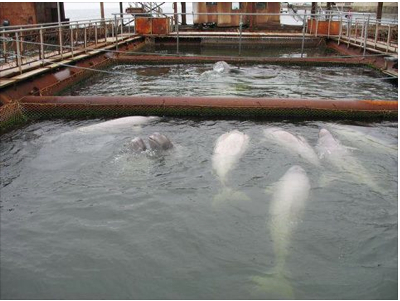
As GNN and many others have reported, The Georgia Aquarium Inc. (GAI) wants to bring 18 wild beluga whales captured in Eastern Russia into the U.S. and distribute them among five captive facilities (GAI, Chicago’s Shedd Aquarium and SeaWorld’s three parks in Orlando, San Antonio and San Diego) for the purpose of public display.
GAI can’t import these animals without a permit. It has now applied for one, and NOAA Fisheres/NMFS has made the application and other documents available for public review.
The law requires a 30-day comment period, but because of the controversial nature of GAI’s request, NOAA has extended that comment period from 30 to 60 days and held a hearing on Friday, Oct 12. (Read how the captive-display industry tried to control who got in and spoke here. Read a summary of who actually said what here.)
NOAA could take until January or February to decide to issue the permit or not, but the deadline for submitting comments for or against is October 29. So the time for people who oppose the import to make their feelings known is now.

Why Not Take Whales from the Wild?
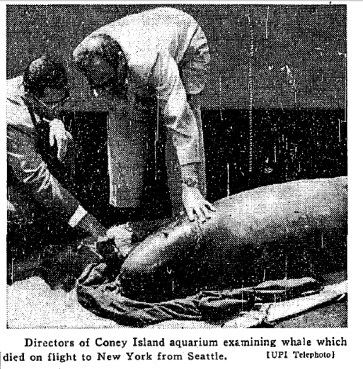
Back when keeping dolphins and whales in tanks first became feasible in the late 1950s after earlier failed attempts, the captive-display industry got all its animals from the wild and nobody thought anything about it.
 But as people began learning more about how intelligent these animals are, what socially sophisticated, family-oriented lives they live in the wild, how barbaric capture methods are and how morally questionable it is to take these animals out of their environment and away from their families and societies to put them in tanks for human entertainment and profit, public opinion began turning against capturing animals for this purpose and court actions and legislative acts in the U.S. and Canada — passage of the Marine Mammal Protection Act of 1972; settlement of a suit against SeaWorld in 1976, following a disastrous capture operation, that ended killer whale captures off Washington State; and Canada’s ban on capturing killer whales and belugas in 1976 and 1992 — began making wild captures for public display harder to do.
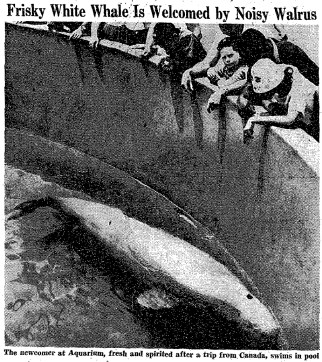
Marine-mammal advocates estimate that no dolphins or whales have been captured and brought into the U.S. for display purposes since 1993. Instead, the U.S. industry turned to filling and refilling its tanks with captive-borns, rescued and rehabbed animals, and animals shipped in from foreign facilities (that may or may not have taken them from the wild, but at least the U.S. facility could say it didn’t.)
These lines of supply plus the pregnancies the industry can now force through artificial insemination (A.I.) have provided U.S. aquariums and marine parks with plenty of Bottlenose dolphins and roughly enough killer whales but not such an adequate supply of belugas.
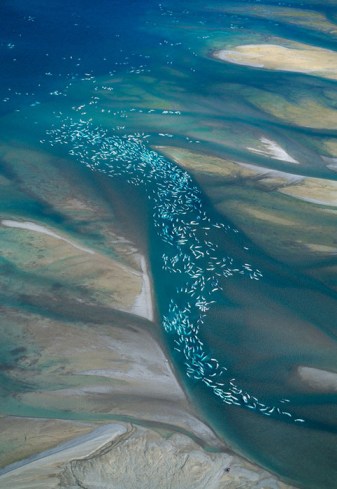
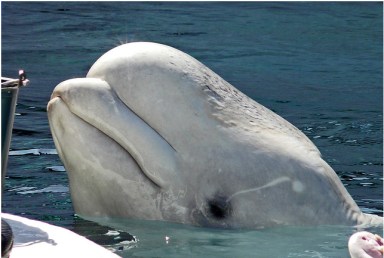
The problem is that these beautiful, sweet-natured, highly sociable, fish-and-crustacean-eating, Artic and sub-Artic dwelling white whales, with their pursable lips, swiveling heads, skin that turns from gray to white at around age two, and rich repertoire of calls, simply don’t do well in captivity.

Belugas taken from the wild tend to be heartier and live longer, and many of the females have babies, but their captive-born offspring don’t live as long and only infrequently reproduce.

Of the approximately 82 belugas captured since 1958 (78 for public display, 4 for the U.S. Navy’s Marine Mammal Program), 13 are living and 69 are dead. The oldest survivor is Ruby, captured in Manitoba in July 1980 for the Navy and sent to SeaWorld San Diego in April 1997. Ruby is around 35 years old now — a record for U.S. captive belugas. In the wild, belugas can live 50 or 60 years.
 Gini's Nature News